Using Mentor Texts in Science
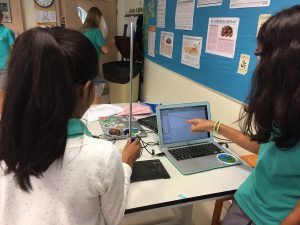
During an option professional learning session on conducting one-on-one conferences with students across all subject areas, I used a video of one of my conferences with an 8th-grade writer to help the teachers unpack the purposes and structure of a conference. The video happened to show me using the mentor text with the students to help her name techniques she could apply to her writing. This sparked the idea of using mentor texts for lab reports in the mind of one science teacher.
After successfully creating a mentor lab report and using it with one class, Polly invited me to come observe how she launched the mentor text with another class.
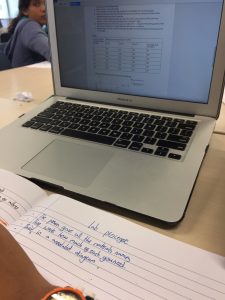 Polly started the lesson by inviting the students to name the purpose of a lab report. One student said, “A lab report allows someone else to repeat the experiment.” Polly elaborated on this by saying, “And so, we want to write our lab reports in a way that will make it easy for someone else to follow the steps and repeat the experiment. So today, I have prepared a mentor lab report to help guide your work as you write yours.”
She paused and reminded the students of how they use mentor texts in English class to give them a vision for their work and to find and use strategies for improving their writing.
Polly digitally shared the mentor lab report she had created and asked the students to read through the procedure section. They needed to notice and make a note in their notebook three to four strategies the writer of that experiment used to make it easy for others to repeat that experiment.
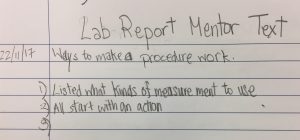
After about 10 minutes of independent study, Polly brought the class back together to share out the strategies they noticed. Students added to their list as other shared.
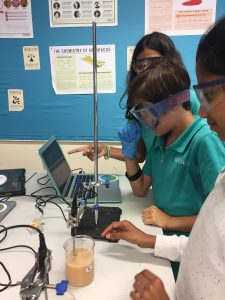
She then sent them off to conduct their experiment and write up their procedure using the strategies they had gathered from the mentor text to make it easy for someone else to repeat the experiment.
Once students were writing up their procedures, Polly was able to confer with groups, partners, and individuals efficiently with the help of the mentor lab guide. She kept coming back to the original question, “What strategies did this writer use to make it easy for someone to repeat this experiment that you could use in your writing?” Sometimes she started a conference off by asking, “What do you notice between what you wrote and what is written in the mentor text?”
These questions allowed the students to name strategies and set their own next steps with increasing independence. This also meant that Polly wasn’t repeating the same tips to multiple students. She found that she was able to see more students and that the students’ lab reports were written with more clarity.
Many literacy teachers use mentor texts regularly to help students envision the work they will do and find their own strategies to improve their work. Where else across a student’s day might we use mentor texts?
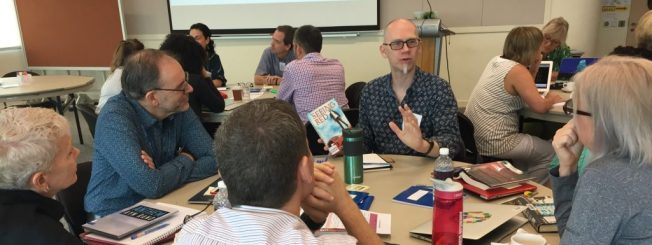
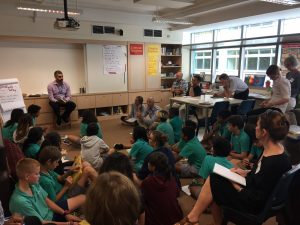
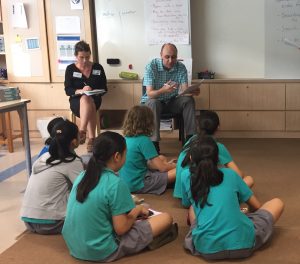 Then, throughout the Literacy Exchange, teachers used their goal to frame their observations and their practice. Before each practice lab site, they named their goal to their team and asked them to watch for specific skills or behaviors to give feedback on afterward. We framed our feedback conversations on the structure of a research-decide-compliment-teach conference.
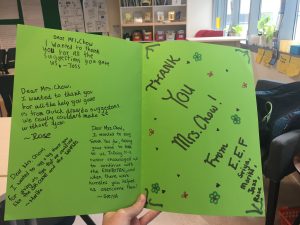 This afternoon I received this lovely thank you note from the four grade five students I mentored during their
 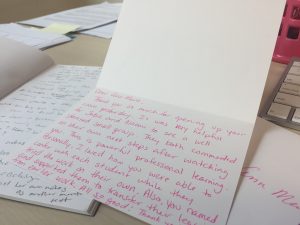 As a Literacy Coach, I use handwritten thank you notes to give compliment feedback to teachers. I am always on the lookout for other opportunities to encourage teachers, show them that they are valued, and nudge them to keep doing the good work they are already doing by naming it for them. This is the same thing we do in our one-on-one conferences with students. We research, then give a compliment by naming something the student is doing that we would like to see them transfer to other work in the future.